
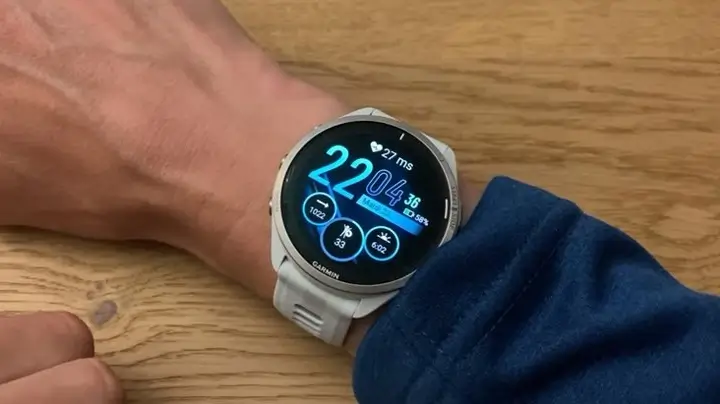
In the fast-moving world of wearable tech, three years is usually an eternity. We’ve seen the arrival of the Forerunner 970 and the powerhouse Fenix 8, both bringing shiny new bells and whistles like integrated flashlights and sapphire displays. Yet, as I lace up my shoes for another morning session in April 2026, the Garmin Forerunner 965 is still the device strapped to my wrist.
It’s not just about nostalgia or avoiding a “tech upgrade.” After thousands of miles and dozens of firmware updates, this watch has hit a sweet spot that newer models haven’t quite eclipsed for a pure runner’s workflow. Here is why the 965 remains my daily driver.
The “Goldilocks” Hardware: Weight vs. Screen
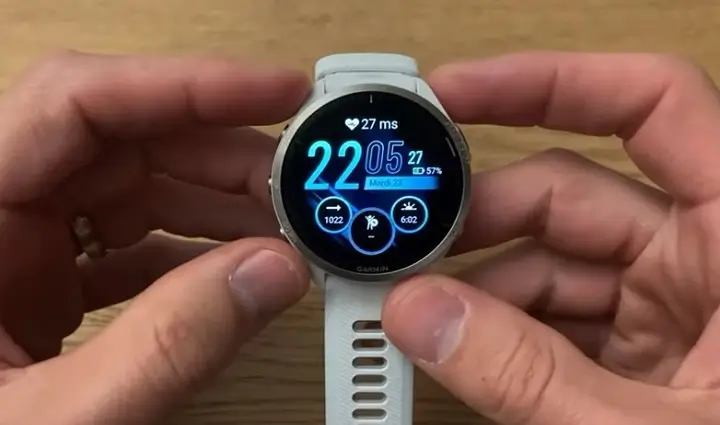
The primary reason I haven’t moved to the newer, bulkier adventure watches is the weight-to-utility ratio. At just 53g, the 965 disappears on my wrist during high-cadence intervals or long Sunday runs.
The 1.4-inch AMOLED display was a revelation when it launched, and in 2026, it still looks stunning. While newer models might boast slightly higher peak brightness, the 965’s screen remains perfectly legible under the midday sun. The titanium bezel has also aged incredibly well; it adds just enough premium protection to prevent the “plastic toy” feel without the heavy, weighted drag of a stainless steel Fenix.
Mapping That Just Works
As someone who loves exploring new trails and urban routes, the on-device mapping is my most-used feature. Even with the release of the 970, the 965’s map rendering is still snappy.
-
Multi-band GPS: Even in “urban canyons” or under heavy tree cover, the accuracy remains surgical.
-
SatIQ Technology: This has been refined through years of software updates (current version 27.09 as of early 2026), ensuring the watch intelligently toggles GPS modes to save battery without me having to think about it.
Software Longevity and “Legacy” Perks
Garmin has been surprisingly generous with back-porting features. Thanks to recent firmware updates, my 965 now handles:
-
Training Readiness: This remains the single most important screen on my watch every morning.
-
Unified Training Status: It syncs perfectly with my other Garmin gear, giving me a holistic view of my recovery.
-
Sleep and HRV Tracking: These metrics have only become more accurate as Garmin’s algorithms have matured over the last few years.
While the Forerunner 970 introduced “Running Economy” stats directly on the wrist, I’ve found that for my level of training, the Chronic Training Load and Training Readiness scores on the 965 provide 95% of the value I actually need to stay injury-free.
The Rucking Reality: Managing the Gaps
I’ll be honest: the 965 isn’t perfect, and being a long-term user means acknowledging where Garmin has moved on. For instance, the 965 never received the native “Rucking” activity profile that became standard on the 970 and the Fenix 8 series.
If you want to log your pack weight directly on the watch to see how it affects your metrics, you won’t find a dedicated button for it here. However, my 2026 workaround is simple: I log those sessions under the “Hike” or “Walk” profile. Once it syncs to Garmin Connect, I spend 30 seconds manually updating the activity type. It’s a minor hurdle, but for me, it’s a fair trade-off to keep the hardware I prefer.
The Verdict: Value Meets Performance
In 2026, the Forerunner 965 has transitioned from being the “expensive new flagship” to the “best value high-end runner.” You can often find it at a significantly lower price point than the 970. Yet, it offers the same core experience: a lightweight frame, a gorgeous screen, and the industry’s most reliable training ecosystem.
For the pure runner who cares about pace, distance, and recovery—and who doesn’t need a flashlight on their wrist—the 965 isn’t just a “backup” option. It’s still the gold standard.
Check Out Garmin Forerunner 965 at Amazon
Also Read: My Garmin Forerunner 170 Wishlist: 5 Upgrades Garmin Can’t Afford to Skip

