

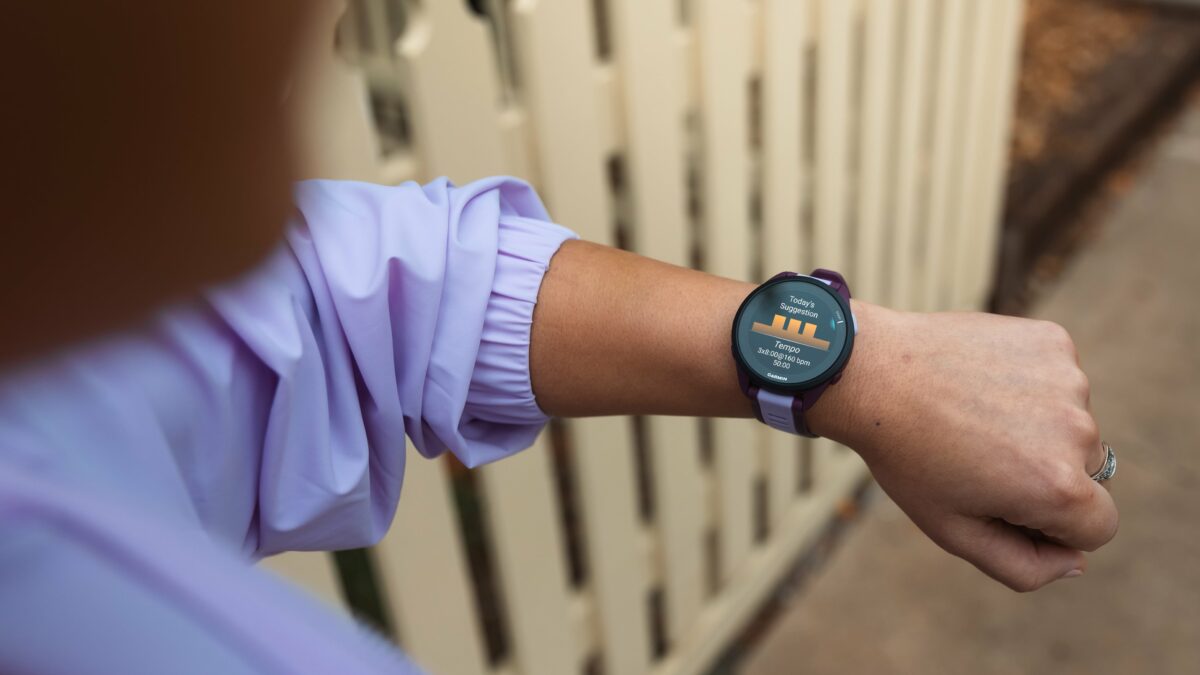
Indeed, the Garmin Forerunner 165 has proved to be among the top value-for-money devices for running enthusiasts, lying somewhere between entry-level and performance-oriented devices. Nonetheless, in terms of the next generation of the device, expectations are high for the next installment of the line – Garmin Forerunner 170.
I have been watching very closely the product release cycle and evolution of products by Garmin, and thus can confidently estimate the timing for this product to come out, as well as the necessary improvements that will ensure that it keeps up with its competitors.
When Can We Expect the Garmin Forerunner 170?
Garmin does not adhere to a fixed annual model update schedule for the Forerunner 100-series line of watches. As seen from the timeline, Garmin skipped the Forerunner 155 and directly launched the 165 model in early 2024. From experience, it is safe to say that Garmin updates its mid-tier watch models every 18 to 24 months.
Considering the latest manufacturing trends and beta testing periods, Spring 2026 appears to be the most realistic timeframe for the release of the Forerunner 170. The new watch will give its predecessor, the 165, a complete run of two years before being replaced by the upgraded version.
My Forerunner 170 Wishlist: What Features Do We Need?
The FR165 made the AMOLED screen available to all runners; however, there is room for improvement. Here is what I want to see from FR170:
1. Multi-Band GNSS (Dual-Frequency GPS)
Multi-Band GNSS is very important for me. Although the current 165 provides very good accuracy, but no “All Systems” multi-band GPS, that we get from 265 and 255. Running in “urban canyons” and thick tree canopies can be easily tracked with dual-frequency support.
2. Training Readiness Score
The FR165 already provides us with “Training Effect” and “Recovery Time”. However, it does not provide a Training Readiness Score. In one number (0-100), it gives the information about your sleep, recovery time, HRV status, and recent load. So, this will help us become our daily coach.
3. Battery Life Improvement
The current model has already improved a lot in battery performance. But we would like to see even better results from FR170. Perhaps, the battery might last up to 7–8 days even while the Always On display mode is
4. Increased Capacity for Storing Music as Standard
I think it’s time for Garmin to introduce an updated model of the Forerunner 170 that will incorporate Wi-Fi and music storage capacity as a standard part of the package rather than offering it as an upgraded model at additional cost.
5. Material Used in Bezel & Build Quality
The Forerunner 165 is made of fiber-reinforced plastic. Though this does keep its weight down, making it more comfortable to wear, it would definitely make the Forerunner 170 more competitive against other brands like Huawei or Amazfit if a higher-quality bezel material were used.
Final Thoughts
Garmin Forerunner 165 revolutionized affordability in running watches, yet the Forerunner 170 may take everything to the next level with its multi-band GPS and improved recovery tracking. Garmin could create the dream watch, one that offers “everything you need and nothing else.”
Also Read: Is the Garmin Fenix 9 Worth the Wait? My Deep Dive into the 2026 Rumors


I’m fine with it not having music / wifi and a separate model that has that, if the non music is more affordable.
We’ve seen newer models like the 570 and 970 have less battery life than previous ones, so I’m not counting on the 170 to have more. But maybe it can if there’s no speaker and microphone taking up battery space.
A flashlight would be nice, but it’s doubtful that they will put it on this model.
Training readiness would be nice. But Garmin tends to leave out some things to try and get people to buy more expensive models.