


A trio of newly published patent filings reveals that Garmin is moving beyond simple connectivity upgrades. Instead of merely adding more radios, the company is looking at how to turn the physical structure of the watch itself into a dynamic, multi-purpose antenna system. This shift could redefine how future Garmin wearables handle GPS, cellular data, and satellite communication.
From Structural Components to Active Signal Receivers
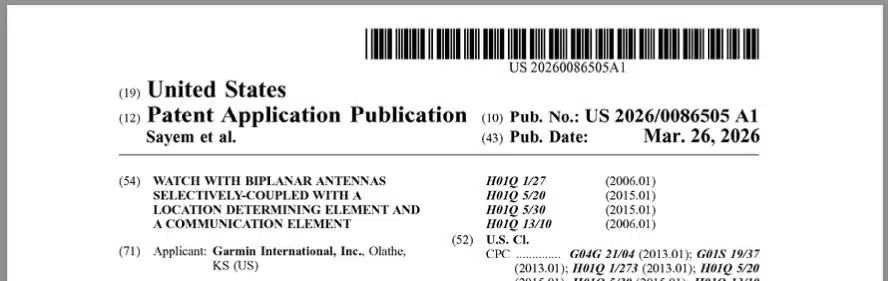
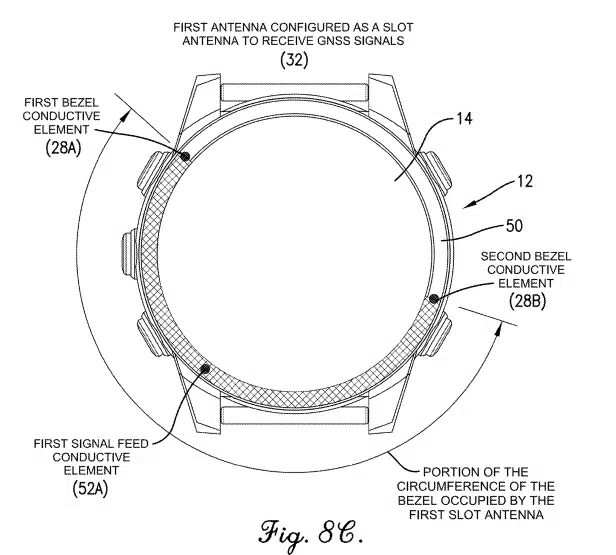
In traditional smartwatch design, antennas are dedicated components tucked away inside the casing. Garmin’s new patents (USPTO 20260086505, 20260088493, and 20260086506) propose a “deeper rethink” where the watch’s structural elements—such as the bezel, the metal bottom plate, and internal rings—serve as the antenna themselves.
Rather than being passive pieces of metal, these parts are designed to be conductive and active. This approach allows the watch to maximize the available surface area for signal reception without increasing the device’s thickness or weight.
Dynamic Frequency Switching and Role Reallocation
Perhaps the most innovative aspect of these filings is the ability for the watch to “reconfigure” its hardware on the fly. In current models like the Fenix 8 Pro or Forerunner 945 LTE, antennas are generally tuned for a fixed purpose—one for GNSS (satellite positioning) and another for cellular or Bluetooth.
The new patent describes a system where different parts of the watch body can switch roles depending on the user’s needs. For example:
-
Hybrid Mode: One part of the frame handles GPS while another maintains a cellular link.
-
Boost Mode: If a cellular signal is weak, both antenna elements can reconfigure to prioritize communication, effectively doubling the watch’s ability to “capture” a signal.
Selectable Tuning Networks for Global Compatibility
Different regions and networks (GNSS, LTE, and non-terrestrial satellite networks) operate on vastly different frequencies. To solve the hardware clutter required to support all these bands, Garmin is developing “selectable tuning networks.
By using internal conductive parts and side walls as part of an adjustable-length antenna configuration, the watch can electrically “shorten” or “lengthen” its antenna properties. This allows a single structural component to tune into multiple frequencies, potentially making future Garmin watches more compatible with diverse global networks without needing regional-specific hardware.
The Practical Impact: Efficiency and Design
While these patents represent “under-the-hood” engineering, the benefits for the end-user are significant. By integrating the antenna into the case, Garmin can achieve several goals:
-
Improved Battery Life: More efficient antennas require less power to maintain a stable connection, especially in challenging environments like deep woods or urban canyons.
-
Slimmer Profiles: Eliminating dedicated internal antenna modules frees up physical space. This could lead to thinner watches or larger batteries in the same footprint.
-
Reliable Satellite SOS: As Garmin continues to push satellite messaging features, a more robust and flexible antenna system ensures that emergency signals have a better chance of reaching their destination.
Looking Ahead
As always with patent filings, these technologies may not appear in the very next product cycle. However, they provide a clear roadmap for Garmin’s engineering priorities: making wearables smarter not just through software, but through the very metal and glass they are built from. If successful, the “antenna-less” look may become the new standard for high-performance outdoor watches.
Source: USPTO (20260086505, 20260088493, 20260086506), gadgetsandwearables

