

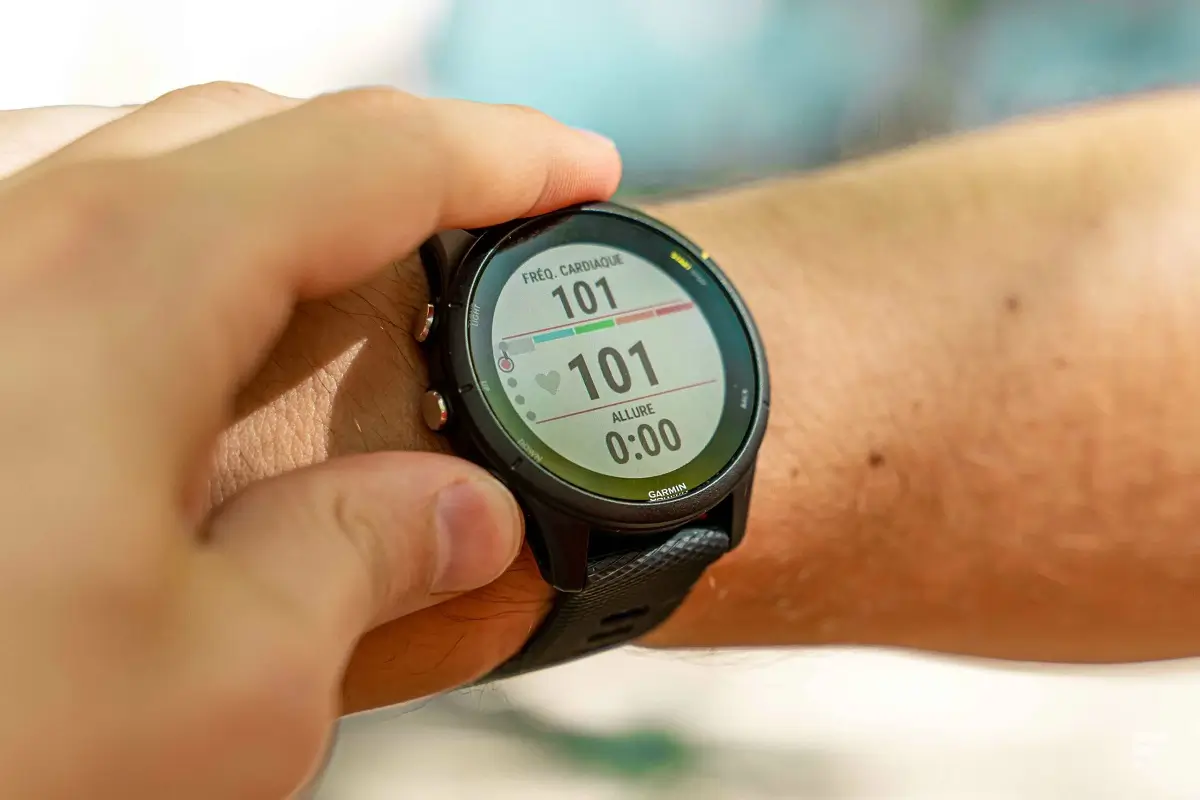
The 2026 London Marathon was a historic day for running, but for those of us who obsess over the tech on the athletes’ wrists, it was a massive win for a specific type of philosophy. While many brands are pushing bright, battery-draining screens, the streets of London proved that when a world record is on the line, nothing beats the reliability of a Garmin with a Memory-in-Pixel (MIP) display.
Elite Performance Demands the Reliability of MIP
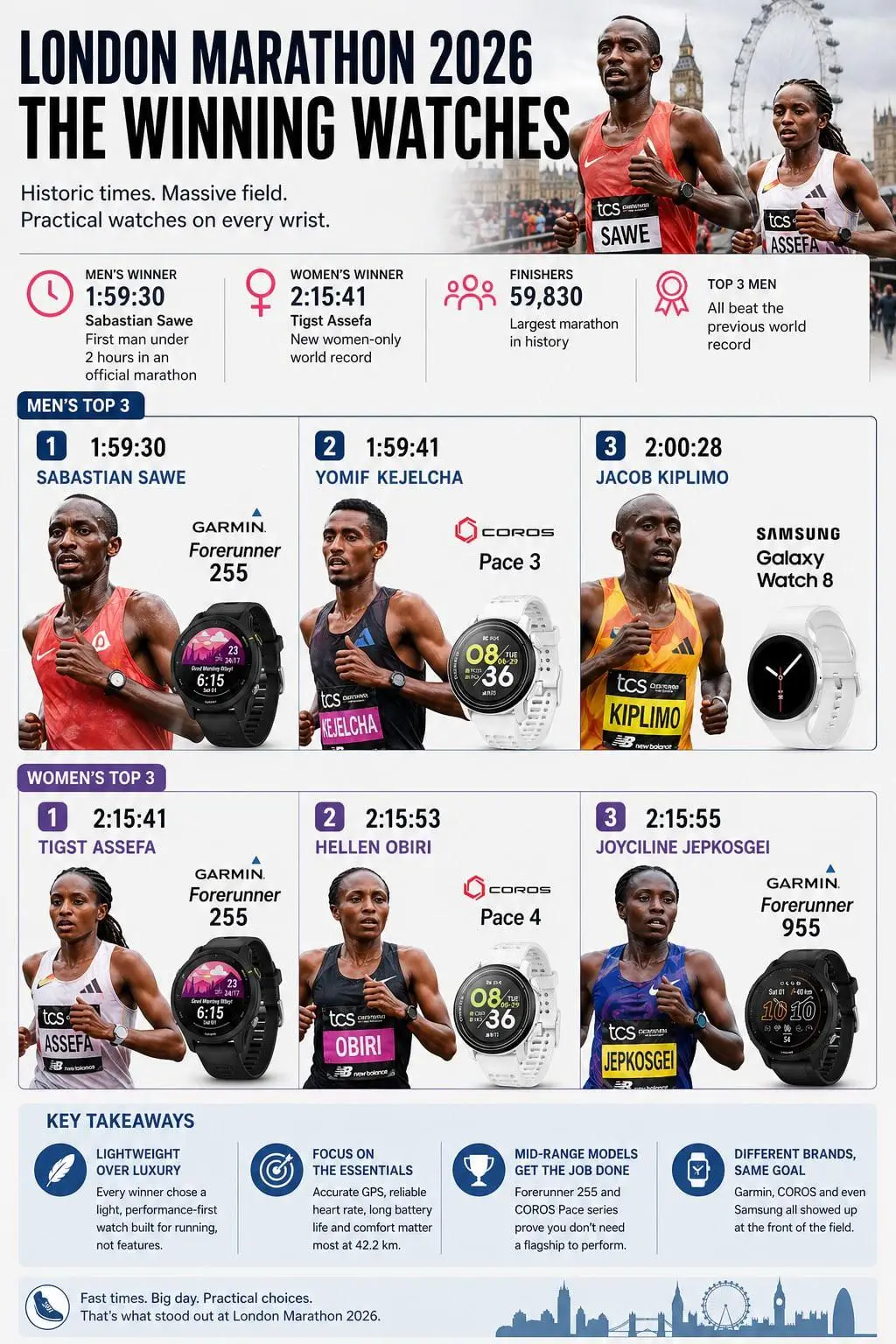
It’s easy to get distracted by the flashy AMOLED screens hitting the market lately, but looking at the elite field in London, the choice was clear. Sabastian Sawe, who just made history with a sub-two-hour 1:59:30, and Tigst Assefa, who shattered the women-only world record at 2:15:41, both crossed the finish line wearing the Garmin Forerunner 255.
As someone who is deeply invested in the Garmin ecosystem, seeing the 255 on the wrists of world champions isn’t a surprise—it’s a statement. The MIP screen is the unsung hero here. In the direct, unpredictable light of a marathon course, you don’t want to be flicking your wrist or hoping an “always-on” AMOLED doesn’t dim at the wrong moment. The MIP display is always visible, always crisp, and uses next to no power, which is exactly why the world’s fastest runners still trust it.
Why the Forerunner 255 is Still the King of the Road
You might wonder why these athletes aren’t wearing the most expensive Fenix or Marq models. The London results highlighted that for a 42.2km sprint, weight and focus are everything. The Forerunner 255 and the Forerunner 955 (spotted on Joyciline Jepkosgei) represent the pinnacle of Garmin’s “no-nonsense” engineering.
The 255 skips the titanium and the lifestyle bloat to focus on what actually moves the needle: elite GPS accuracy and a weight so low you forget it’s there. When you’re pushing a sub-two-hour pace, every gram matters. These watches provide the essential metrics—pace, lap time, and heart rate—with a battery life that stays rock solid because it isn’t fighting to power a high-resolution flashlight on your wrist.
The Technical Edge Over the Competition
While COROS made an appearance with the Pace series and Samsung had a surprising showing on Jacob Kiplimo’s wrist, Garmin still felt like the professional standard. The data-driven metrics we love—like HRV status and training readiness—are integrated so seamlessly into the Forerunner line that it becomes an extension of the athlete’s training.
The fact that an “older” model like the 255 can lead the pack against brand-new competitors says everything about Garmin’s build quality. It’s not about having the newest gadget; it’s about having the most reliable tool.
Final Thoughts: Simplicity Wins Races
If the 2026 London Marathon taught us anything, it’s that the trend toward making sports watches look like smartphones isn’t necessarily what the pros want. Seeing those MIP screens crossing the finish line first is a great reminder of why we fell in love with this tech in the first place. It’s rugged, it’s readable in any light, and it’s built to endure.
For those of us chasing our own personal bests, the lesson is simple: you don’t need the most expensive watch to be the fastest. You just need a Garmin that works as hard as you do.
Also Read: The 5 Garmin Launches I’m Saving My Money For in H2 2026


Are you sure that it was a 255? Other posts I’ve seen say it was a 55.