

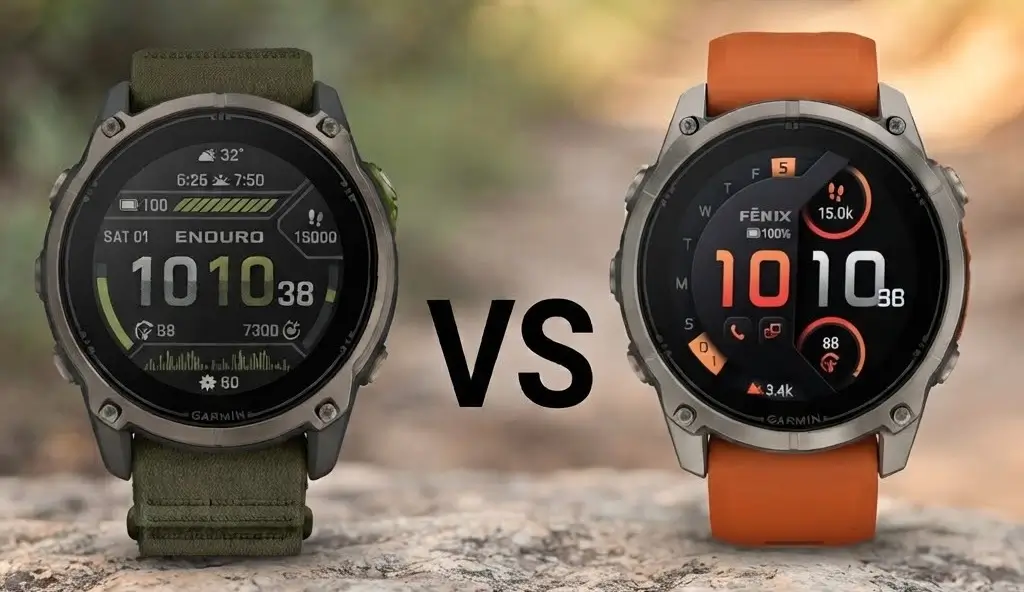
Garmin’s newest high-end outdoor watches are finally here, and if you are shopping for a top-tier adventure companion, you are probably torn between two heavyweights: the ultra-endurance-focused Garmin Enduro 4 and the versatile, multi-tier Fenix 9 Series.
Both watches sit at the absolute peak of sports technology, but they cater to very different types of athletes. Here is a close look at how design, features, battery life, and pricing stack up.
Design and Display: MIP Solar Brilliance vs. AMOLED Choices
The most immediate difference you will notice between these two lineups comes down to the screen and the physical build.
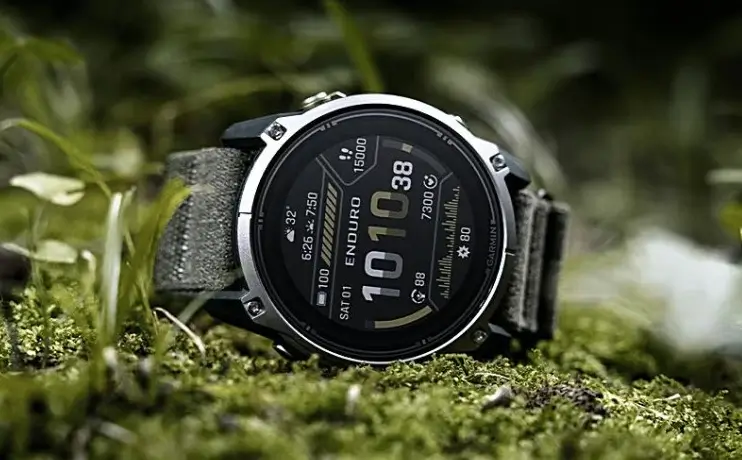
The Garmin Enduro 4 keeps things simple and laser-focused. It comes in a single 51mm size with a lightweight titanium bezel, a fiber-reinforced polymer case, and a comfortable UltraFit fabric strap. Total weight sits at just 66 grams. It uses a transflective Memory-in-Pixel (MIP) screen covered by a Power Sapphire solar lens. If you spend your days running under blazing sun or cycling out on open roads, MIP displays only get sharper and easier to read the brighter the daylight gets.
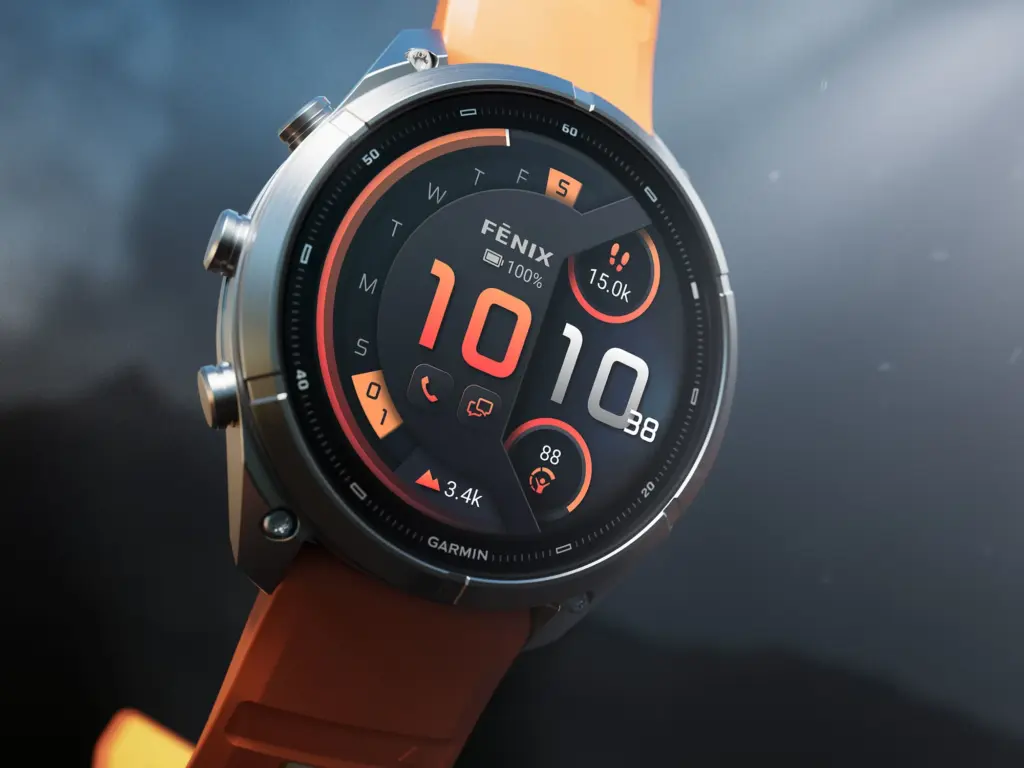
On the other side, the Fenix 9 Series gives you a massive buffet of choices. The Fenix 9 family spans three distinct sizes (43mm, 47mm, and 51mm) to fit every wrist. More importantly, Garmin has made AMOLED screens the standard option for most of the Fenix lineup, while still offering traditional MIP Solar versions on select Pro tiers. Because of the metal-heavy builds and dense screen technology, Fenix 9 models generally feel a bit heavier on the wrist than the Enduro.
Under the Hood: Speed, Storage, and Smart Features
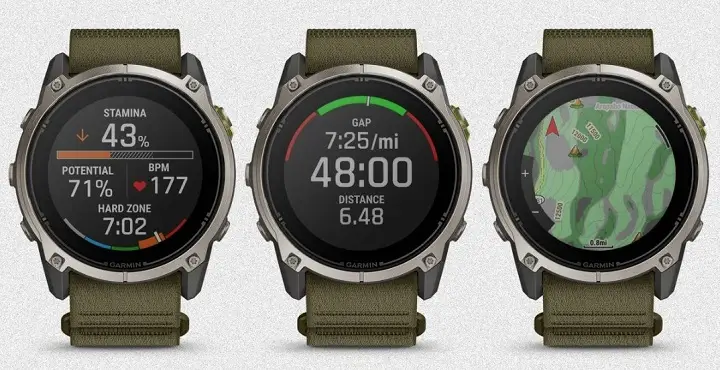
Both watches benefit from Garmin’s latest hardware generation. You get doubled storage at 64GB for local maps and music, plus an upgraded processor that makes map panning and zooming roughly 30% smoother than previous generations.
However, their feature sets target different priorities:
-
Garmin Enduro 4: This watch is built strictly for training hard and going long. It features advanced physiological metrics, Stamina tracking, Hill Score, Endurance Score, and dual-frequency GPS. It intentionally skips lifestyle extras like microphone-based voice assistants and built-in speakers to keep the device streamlined.
-
Fenix 9 Series: This lineup functions as a Swiss Army knife, but the exact capabilities depend heavily on which tier you buy. While all Fenix 9 watches include features like dive-rated water buttons (down to 40 meters), voice memos, and speaker/mic phone calls, only the specific Pro inReach editions add hardware for built-in LTE and satellite messaging. Base and standard Pro models do not include satellite connectivity.
Battery Life: The Undisputed Enduro Crown
When it comes to pure endurance, the Enduro 4 still reigns supreme. Thanks to its power-sipping MIP screen and massive solar charging ring, it leaves almost every other watch in the dust.
| Use Case | Garmin Enduro 4 (51mm MIP) | Fenix 9 Series (51mm Solar MIP) | Fenix 9 Series (51mm AMOLED) |
| Smartwatch (No Solar) | 36 Days | Up to 30 Days | Up to 31 Days |
| Smartwatch (With Solar) | 90 Days | Up to 57 Days | N/A (AMOLED has no solar) |
| GPS Activity Mode | 80 to 144+ Hours | 75 to 124 Hours | ~40 to 60 Hours |
| Best Suited For | Multi-week expeditions & 100-milers | Heavy daily use with occasional solar top-offs | Vibrant daily smart features & rich graphics |
Pricing and Lineup Breakdown
Because the Enduro 4 comes in just one fully loaded specification, its price tag is straightforward. The Fenix 9 ecosystem, meanwhile, scales widely depending on size, glass, glass-type, and whether you pay up for satellite communication tiers.
| Model Series | Size Options | Display Type | Launch Price Range (USD) |
| Garmin Enduro 4 | 51mm only | MIP Solar | $899.99 |
| Fenix 9 Base / Pro | 43mm, 47mm, 51mm | AMOLED or MIP Solar | $999.99 – $1,249.99 |
| Fenix 9 Pro inReach | 43mm, 47mm, 51mm | AMOLED or MIP Solar + Satellite | $1,199.99 – $1,399.99 |
The Verdict: Which One Should You Buy?
Choosing between the two comes down to what you value most on your wrist.
Go with the Garmin Enduro 4 if your main goals are ultra-long-distance running, multi-week battery life without charging, and a featherlight watch that won’t bounce around on your wrist. Plus, at $899, it is priced aggressively compared to the top-tier Fenix options.
Go with the Fenix 9 Series if you want wrist-size choices, prefer the gorgeous punch of an AMOLED display, or need to step up to a Pro inReach model for off-grid satellite safety features.
Also Read: Garmin Enduro 4 vs. Enduro 3: What’s Actually New? Should You Upgrade?

