

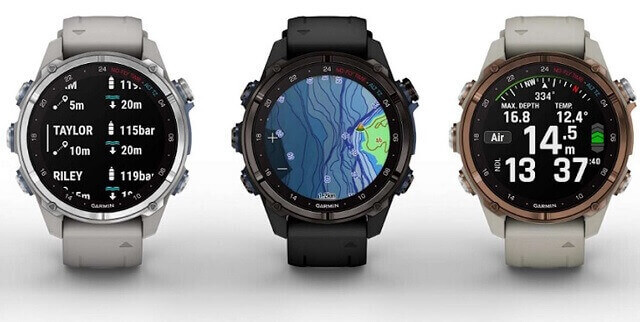
As we move through 2026, the buzz in the diving community is reaching a fever pitch. Having tracked the evolution of Garmin’s wearable tech for years—from the early days of the Mk1 to the game-changing AMOLED display on the Mk3—it feels like we are on the precipice of something big.
The Garmin Descent Mk4 and Mk4i are the next logical steps for the world’s most versatile dive computer. Based on the recent release of the Fenix 8 and the patterns I’ve observed at Garmin, here is my deep dive into when we might see these watches and the features I’m personally hoping for.
When Will the Descent Mk4 Release?
Garmin operates on a much slower cycle for the Descent series compared to their running watches. Looking back at the timeline:
-
Descent Mk1: Late 2017
-
Descent Mk2: Late 2020 (Approx. 3-year gap)
-
Descent Mk3: Late 2023 (Approx. 3-year gap)
If Garmin maintains this three-year cadence, a November 2026 launch for the Descent Mk4 seems highly probable. This aligns with the DEMA Show (the diving industry’s largest trade event), where Garmin traditionally likes to make a splash.
My Mk4 & Mk4i Feature Wishlist
While the Mk3i introduced SubWave sonar for diver-to-diver messaging, there is still room for the “perfect” dive computer to grow. Here is what I want to see:
1. Leakproof Inductive Buttons Across the Board
The Fenix 8 finally brought the leakproof inductive buttons to the flagship outdoor line. For the Mk4, I expect these to be standard. This tech removes the physical “piston” through the case, virtually eliminating the most common point of failure for water ingress.
2. Native Cellular (LTE) for Surface Safety
This is my #1 “Safety” request. Imagine surfacing far from the boat and being able to trigger an SOS or send a GPS ping to the dive boat via LTE without needing a satellite inReach device paired. Even if it’s only for emergency features on the surface, it would be a literal lifesaver.
3. SubWave 2.0: Greater Range and Precision
The current SubWave tech is incredible, but the range for messaging is limited to about 30 meters. I’m hoping the Mk4i (paired with a new T3 transceiver, perhaps?) pushes that range further and adds more granular “Diver Assistance” alerts, like low-air warnings for your buddy that trigger a more intense haptic vibration.
4. MicroLED Display Technology
While AMOLED is beautiful, MicroLED is the future. It offers the same (or better) contrast and brightness but with significantly lower power consumption. This could finally give us the 100-hour “Dive Mode” battery life that tech divers have been dreaming of.
5. Improved “Dive Readiness” 2.0
The current Dive Readiness score is a great start, but I’d love to see it integrate more data from the Elevate Gen 6 sensor (which we expect to see soon). Specifically, better tracking of how micro-bubbles and surface intervals affect our recovery in real-time between repetitive dives.
Expected Comparison: Mk3 vs. Mk4
| Feature | Descent Mk3i (Current) | Descent Mk4i (Expected) |
| Display | AMOLED | MicroLED or High-Bright AMOLED |
| Buttons | Inductive (Mk3) | Advanced Inductive (from Fenix 8) |
| Sonar | SubWave (30m range) | SubWave 2.0 (Extended range) |
| Safety | Satellite Bridge (inReach) | Native LTE / Satellite Messaging |
| Heart Rate | Elevate Gen 5 | Elevate Gen 6 |
Final Thoughts
The Descent series isn’t just a watch for me; it’s a critical piece of life-support equipment that happens to track my morning runs. If Garmin can bridge the gap between the ruggedness of a Fenix and the connectivity of a modern smartphone, the Descent Mk4 won’t just be an upgrade—it will be the new gold standard for the industry.
Also Read: Garmin Releases Stable Update Version 25.20 for Descent Mk3 and Mk3i: What’s New?


Agreed on all fronts!
Mk3i actually still uses the Elevate Gen 4 HR