
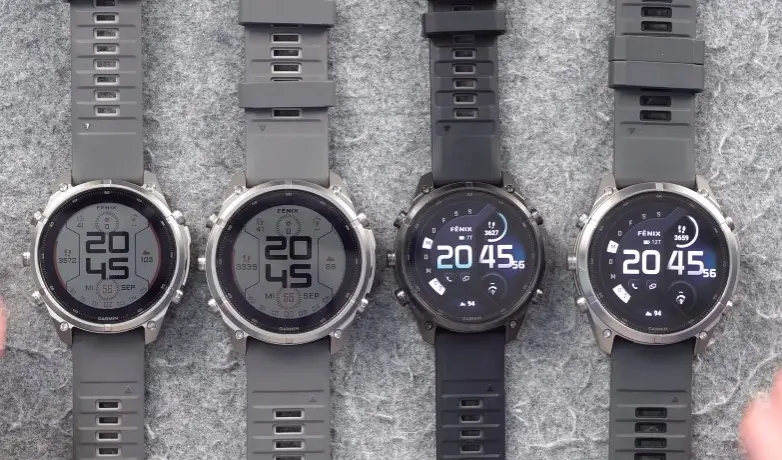
Based on direct hands-on testing and comparison by the YouTube channel DNA – DailyNerdAlert.
Garmin’s premium outdoor lineup has reached an interesting fork in the road. With the arrival of the Fenix 9 Pro series, athletes and outdoor enthusiasts must decide between traditional Memory-in-Pixel (MIP) solar displays and vibrant AMOLED touchscreens.
While both variants share the core software experience and top-tier build quality, real-world testing by tech reviewer DNA – DailyNerdAlert highlights clear functional differences that could alter your decision depending on how, when, and where you train.
Design, Sizing, and Titanium Builds
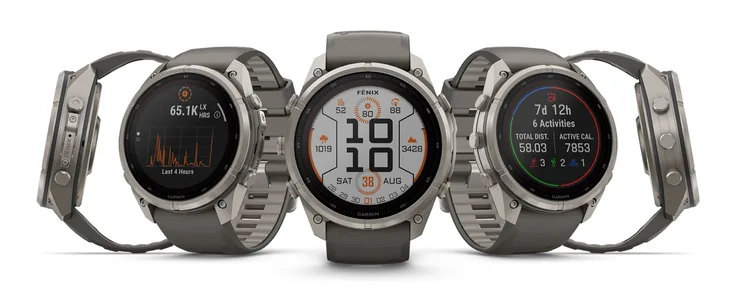
Garmin upgraded the entire lineup to full titanium cases, giving both the AMOLED and Solar MIP versions a premium, durable feel. However, the options available to buyers depend heavily on which display technology they choose.
The AMOLED version gives buyers more flexibility. It comes in three sizes—43 mm, 47 mm, and 51 mm—and is offered in both Black and Silver titanium finishes, with or without inReach satellite messaging. The Solar MIP version is more limited. Garmin offers it only in 47 mm and 51 mm sizes, skipping the smaller 43 mm option entirely. It is also restricted to a single color finish, though you can still choose to add inReach technology.
The underlying screen hardware also impacts the size and weight on your wrist. Because the Solar version needs an extra solar charging ring surrounding the screen, its display panel is slightly smaller than the AMOLED panel in the same case size. The 47 mm Solar model uses a 1.3-inch screen, while the 47 mm AMOLED fits a larger 1.4-inch screen. In the 51 mm size, the Solar uses a 1.4-inch display compared to a generous 1.5-inch panel on the AMOLED model.
The extra solar hardware makes the MIP watch slightly thicker and heavier. The 47 mm AMOLED version sits at 13.8 mm thick and weighs 78 grams with the strap, whereas the 47 mm Solar version measures 15.8 mm thick and weighs 84 grams. In the larger 51 mm size, the AMOLED version is 15.8 mm thick and 99 grams, while the Solar version expands to 16.6 mm thick and 102 grams. Despite these physical differences, both models keep Garmin’s built-in multi-LED flashlight, offering white, red, and green light modes across all versions.
Display Performance in Real-World Conditions
How these screens perform out on the trail reveals clear trade-offs. The Solar MIP display shines brightest in direct daylight. Because it uses ambient light to illuminate the pixels, direct sunlight makes the screen clearer without requiring any backlighting or extra battery power. This makes the Solar MIP watch the superior choice for cyclists who mount their watch directly to bike handlebars. Unlike the AMOLED screen, which dims after a short timeout of 4 to 15 seconds to save power, the MIP display stays fully readable on a handlebar setup throughout the day without dimming.
When the sky turns cloudy or night falls, the AMOLED screen takes over. Under low light, the MIP panel loses its natural contrast and relies heavily on its internal backlight. The AMOLED display reaches up to 3,000 nits of peak brightness and delivers rich contrast that makes topographic maps, elevation graphs, and navigation turns much easier to read at a glance.
Software Features, Watch Faces, and Interface
Both models run Garmin’s updated map engine, which makes panning and zooming around maps roughly 30 percent smoother than on previous generations. Both watches also allow up to eight data fields per activity screen and include identical fitness tools, such as real-time Stamina tracking, new rowing metrics with VO2 Max and FTP calculations, Skierg support, and the new Epics tracking feature.
Where they differ is in visual design and accessibility settings. The AMOLED model takes advantage of its colorful screen with animated weather widgets that show falling rain, drifting clouds, or clear night skies, alongside smooth menu transitions. It also comes with 12 new stock watch faces and a large library of classic designs from the Forerunner and Venu series, while the Solar MIP watch features a much smaller list of default watch faces.
Accessibility features also favor the AMOLED version. Garmin added built-in color filters to aid users with vision sensitivities or colorblindness, offering Grayscale, Red-Green, and Blue-Yellow adjustments. The AMOLED screen also supports a Blue-Light Filter and dedicated night modes—including Red Shift, Green Shift, and Orange Shift—to protect night vision during evening activities.
Battery Life and GPS Field Tests
Battery life remains a primary selling point for the MIP Solar line, but real-world testing from DNA – DailyNerdAlert shows that the winner depends entirely on when you train.
Garmin lists the 47 mm AMOLED version at up to 18 days of battery life in smartwatch mode, while the 47 mm Solar version can reach up to 21 days standard, or 34 days with sufficient solar exposure. In the larger 51 mm case, the AMOLED model lasts up to 31 days, while the Solar version reaches 30 days standard and up to 57 days under ideal 50,000 Lux sunlight conditions.
To see how those numbers hold up during actual workouts, DailyNerdAlert tested 51 mm units during outdoor cycling trips under two different light conditions:
-
Daytime GPS Navigation (5,200 Lux/hour sunlight): The AMOLED watch running in Always-On mode at max brightness used 3.75 percent battery per hour, providing roughly 26 hours of continuous tracking. The Solar MIP watch used just 2.80 percent per hour, extending total continuous tracking time to about 35.5 hours.
-
Dusk and Night GPS Navigation (No sunlight, backlight required): When training in the dark, the continuous backlight required to make the MIP screen readable increases its power drain. The AMOLED watch used 1.76 percent battery per hour (about 56 hours total), while the Solar MIP watch consumed 2.35 percent per hour (about 42.5 hours total).
This creates an interesting bottom line for athletes. If you spend long hours training in broad daylight or going on multi-day backcountry trips, the Solar MIP model remains the efficiency champion. But if you do most of your running and riding at dusk, at night, or indoors where the screen backlight stays active, the AMOLED panel actually drains less battery per hour during active tracking.
Also Read: Garmin’s New Fenix 9 Pro Is Live on Amazon—Here Is What You Need to Know

