

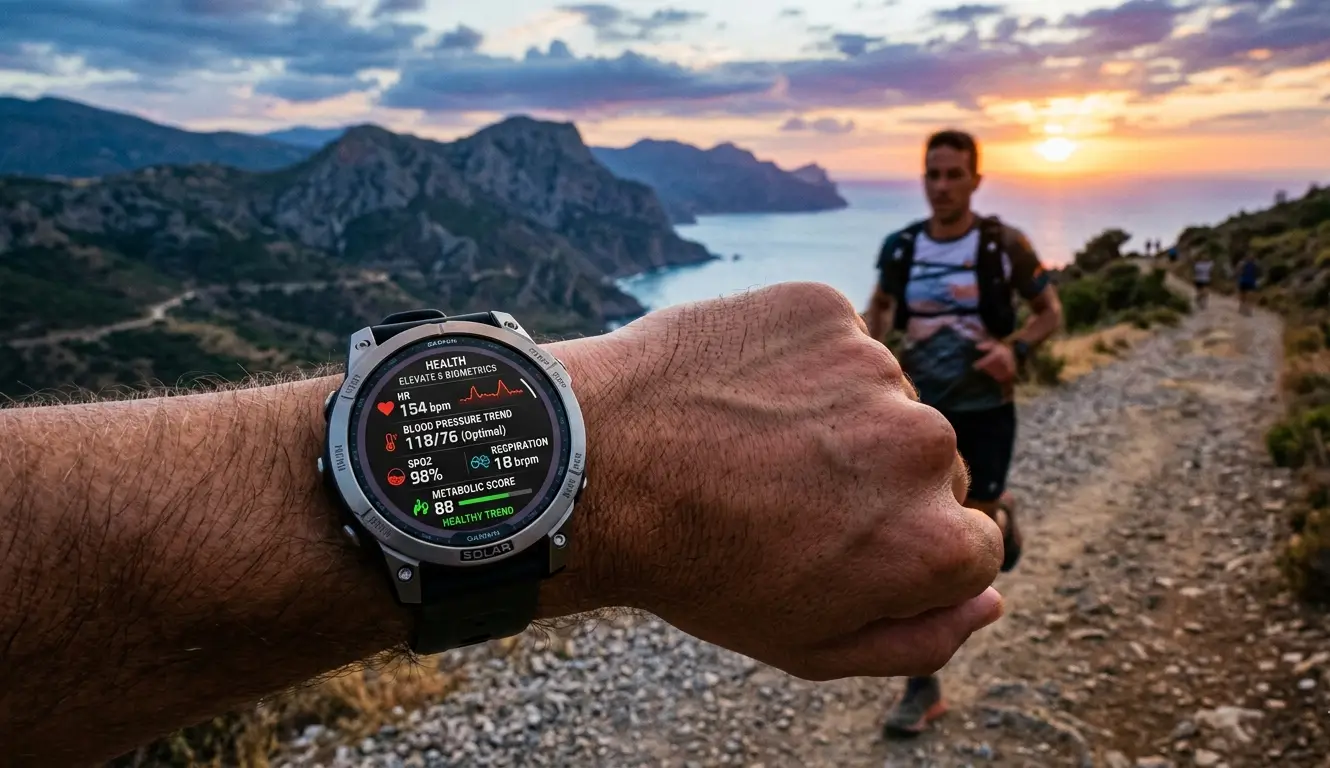
With the company already halfway through the 2026 roadmap, the hype surrounding Garmin’s next breakthrough in biometric tracking cannot be higher. Although the introduction of LTE and satellite messaging in the latest version of the Fenix series has made our lives easier, the question on everyone’s mind is – where is the next generation of heart rate sensors?
While the previous version of the sensor, the Elevate Gen 5, has been very reliable, current market trends indicate an inclination towards ‘medical-lite’ functionality and higher accuracy. Below, you can see my take on when we should expect the Elevate Gen 6 and what its main features could be.
When to Expect the Release
Garmin has never been hasty about the release of these sensors. The Gen 4 sensor appeared back in 2021, while Gen 5 was released in 2023. With that in mind, based on their two-year schedule and recent trends in the industry, here’s the most likely scenario:
Main Contender: Fenix 9 (End of Q3/Early Q4 2026)
Garmin CEO Cliff Pemble suggested a very active second half of 2026 for the company’s outdoor range. Considering that the Fenix line serves as a main carrier of Garmin’s first sensors, a release of Fenix 9 (equipped with Gen 6 sensor) by September 2026 would be safe.
The Upset: Garmin CIRQA
There’s a lot of buzz going around regarding the upcoming premium or health-oriented band known as Cirqa. If Garmin decides to position Cirqa as a special health wearable, it will be an ideal way to “softly launch” Gen 6 before its official release in the Fenix 9.
Expected Features: More Than Just Heart Rate
The Elevate Gen 6 is not only a pulse monitor but represents an even more sophisticated optical array. The following characteristics are expected to be present:
1. Multi-Path Signal Processing
Recent patent filings point out that Garmin seems to be working on a multi-path photoplethysmogram system. Unlike existing sensors, which are based on the centrally located light path technology, Gen 6 will include multiple emitters and detectors located further from each other. Such a design will allow the watch to analyze various levels of tissues and to reduce the noise coming from the high-motion activity, such as rucking or HIIT.
2. Blood Pressure Trending
That is the “Holy Grail” of 2026. Although a user will not get a full-fledged medical diagnostic equipment, the Gen 6 will be capable of analyzing blood pressure trend without using any cuff device. The watch will do that by analyzing Pulse Arrival Time (PAT), the time taken by pulse waves to move from a person’s heart to his/her wrist.
3. Greater Accuracy for Denser Skin and Tattoos
The other remaining challenge that optical sensors face is light absorption. It appears that Gen 6 will be able to measure a larger spectrum of frequencies (possibly even getting up to SWIR). It would allow the sensor to detect users who have more melanin or tattoos on their wrists, which is something that leads to cadence lock on the older model.
4. Passive Arrhythmia Monitoring
Although we already have manual ECG on Gen 5, what seems likely for Gen 6 is passive notifications on irregular heart rhythm. The sensor will work automatically, 24/7, detecting your potential atrial fibrillation and notifying you of it without having to touch the bezel and measuring your heart rate for 30 seconds.
5. Hydration and “Medical” Measurements
There were some talks regarding Hematocrit detection and Blood Glucose level trend tracking. Although glucose monitoring is a huge regulation issue, the next generation hardware could pave the way for providing a Metabolic Health Score, based on skin temperature and improved photoplethysmography.
Closing Remarks
While the Elevate Gen 5 was an improvement, the Gen 6 seems like a turning point. For us at Garmin News, moving forward with the launch of the Fenix 9 would be our biggest achievement since switching to AMOLED.
For those waiting for maximum accuracy in health monitoring devices, it should definitely not be too long before mid-2026 when Gen 6 will finally hit the market. The Gen 6 is not only a sensor but also the brain behind Garmin’s upcoming health revolution.
Also Read: Garmin Fenix 9 Release Date & Expected Features (My Predictions)

