

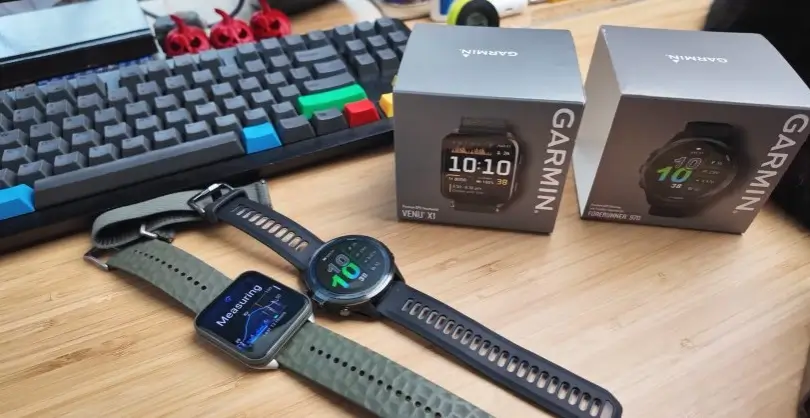
For some people, myself included, looking through YouTube every day for any news about new firmware or upcoming devices by Garmin has become an integral part of the routine. Well, this morning, while browsing the Internet, the video “Why I Returned Garmin Venu X1 After 5 Months for Forerunner 970” posted by The Gizmo Garage was what really interested me.
The thing is that not often will one see a review where the creator expresses disappointment in the performance of their device and says that it did not meet their expectations, even after the first few months of using it.
The Comfort Trap
This reviewer didn’t open up complaining about anything. On the contrary, he actually used this watch for five whole months! This is how he praised the “insanely thin” form factor and hypoallergenic titanium back. Here, I have to say that Garmin did well; the X1 could possibly be the most comfortable watch by Garmin yet. Not into the chunkiness of your average sports watch? The Venu X1 will change that.
The Dealbreakers: Battery and GPS
Nonetheless, as the months went on, there were two significant pain points that could no longer be ignored. This is where the video definitely resonated with me, because these are some of the things I’ve been thinking about recently.
- The 5-Day Battery Wall: The Venu X1 provides around 5 days of battery life. If you’re a casual user, it’s adequate. But as a Garmin ecosystem enthusiast, you know better than that. The Forerunner 970 bumps that up to two weeks. As someone who measures everything from HRV to sleep quality, having to plug in your watch periodically is simply an irritation that adds up over time.
- Issues with Single-Band GPS: I definitely concur with him regarding the GPS. While the Venu X1 employs the single-band technology, the 970 uses dual-band (Multi-Band).
The Delay: In fact, the time difference between locking the two watches was mentioned by him; the former took a few more seconds than the latter. While it might appear inconsequential, for someone who has already put on their running gear in the biting cold, these few seconds make all the difference.
Precision of the Feature: As regards the Auto-Stop function, the single-band GPS technology lacked the precision to stop when he stopped. Being a data-centric individual, such ‘delay’ was hard to digest.
Form vs. Function
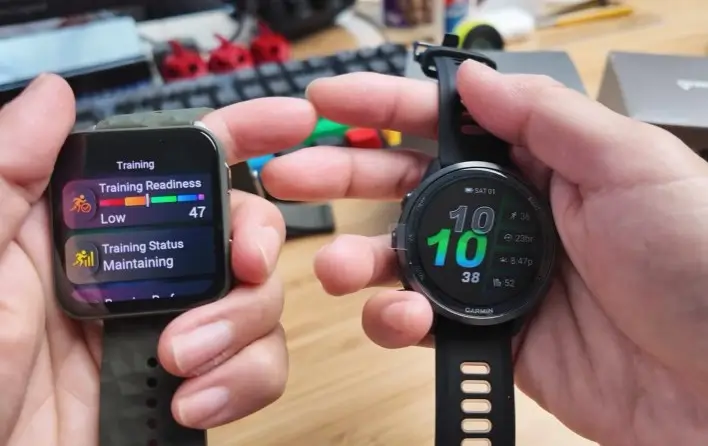
Another thing that the video pointed out that I have observed as well is the Square vs Round argument. Although the square screen of the Venu X1 is perfect for reading texts, most of Garmin’s high-end watch faces are made for round screens. Hence, you will have many empty spaces on the X1 while the 970 feels like it all fits together.
My Take
Seeing this video was definitely eye-opening in some ways. When one sees something that looks good, it is hard to resist, but in terms of fitness tracking, what really counts is GPS accuracy and battery life.
While the Forerunner 970 does not look as good with its slightly more chunky build, compared to the sleek X1, it offers ECG functionality as well as practicality for athletes who do not care about aesthetics too much. If you are considering getting either of these two, you should probably take advice from Gizmo Garage: get the 970 unless you really want the slimmest watch.
Also Read: The 5 Garmin Launches I’m Saving My Money For in H2 2026


in fact my forerunner 970 is 6 days with aod on and 1,5 hour sport with gps every day ( golf or running). this means in same conditions the X1 will have 2 days battery life ? ( 5 days / 14 days = 1/3 of the 970)