


If you follow outdoor sports watches closely, you probably know the classic Garmin dilemma. You have to choose between the brilliant, punchy colors of an AMOLED screen and the endless battery life of a solar-powered Memory-in-Pixel (MIP) display. For years, putting a traditional solar layer over an OLED screen was a dealbreaker because it dulled the display and killed the brightness and contrast.
We actually covered a similar concept in our deep dive into Garmin’s previous patent tracking solar and AMOLED display fusion last year (read that article here). However, tech news site Gadgets & Wearables recently spotted a brand-new patent from Garmin filed with the United States Patent and Trademark Office (USPTO). After digging even deeper into the official patent files (US 20260362887 A1), we can reveal exactly how Garmin is refining this technology to solve the puzzle once and for all.
What Our Deep Dive Into the Patent File Reveals
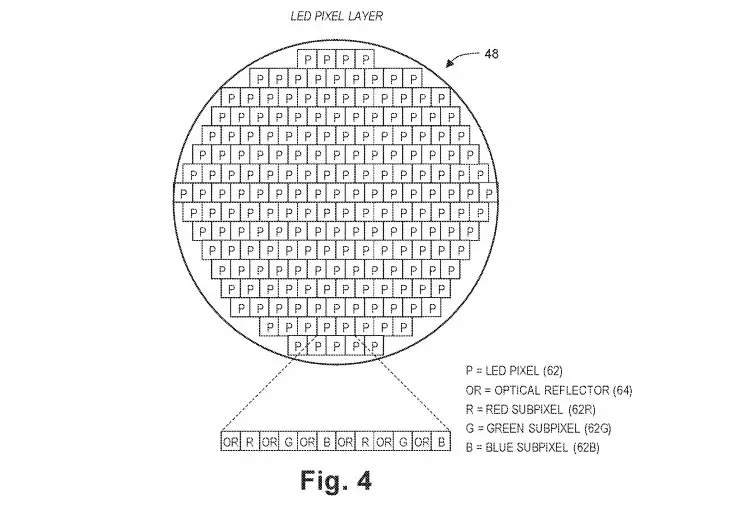
Looking closely at the patent drawings and technical descriptions, Garmin isn’t just placing a generic solar sheet over the top of the watch. Instead, they have engineered an Integrated Energy-Collecting Display Module built in precise layers:
-
The Pixel Layer: At the bottom, an LED pixel layer (supporting OLED, AMOLED, or even microLED) generates bright images using red, green, and blue subpixels.
-
The Color Filter Layer: Right above that sits a custom color filter array that matches the pixel grid perfectly, ensuring vivid and accurate colors pass through cleanly.
-
The Photovoltaic Layer: This is where the core innovation lies. Rather than covering the whole screen with a dark solar panel, Garmin places tiny photovoltaic (solar) elements in the gaps between the subpixels and filters, paired with clear transparent windows directly over the pixels.
-
Optical Reflectors: The design also includes tiny metal reflectors tucked between the pixels to bounce stray light around, maximizing both screen brightness and energy capture.
What This Means for Future Garmin Watches
By slipping the solar cells into the micro-gaps between the screen’s pixels, light can pass straight through to your eyes without getting blocked or dimmed. At the same time, ambient light hitting the watch face can be captured by the hidden solar grid to trickle-charge the battery.
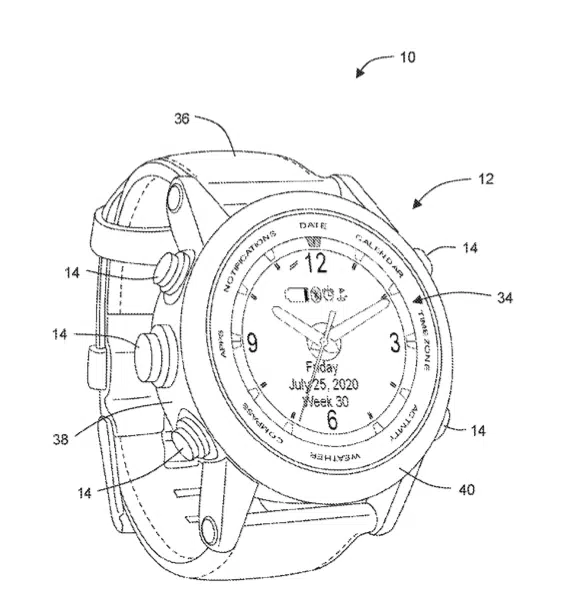
The patent illustrations even hint at a rugged outdoor watch design featuring a circular case and a functional bezel marked with features like notifications, a calendar, a compass, and weather tracking.
Of course, this is still a patent, which means it represents an engineering blueprint rather than a confirmed product hitting shelves tomorrow. But it proves that Garmin is working hard behind the scenes to bridge the gap. If they can successfully bring this layered display to life, future outdoor watches might finally give us the best of both worlds: a gorgeous, vibrant AMOLED screen that keeps charging itself under the sun.
Also Read: Garmin Early Black Friday Sale: Best Deals on Fenix 8, Forerunner 965, and More (Up to 44% Off)

