

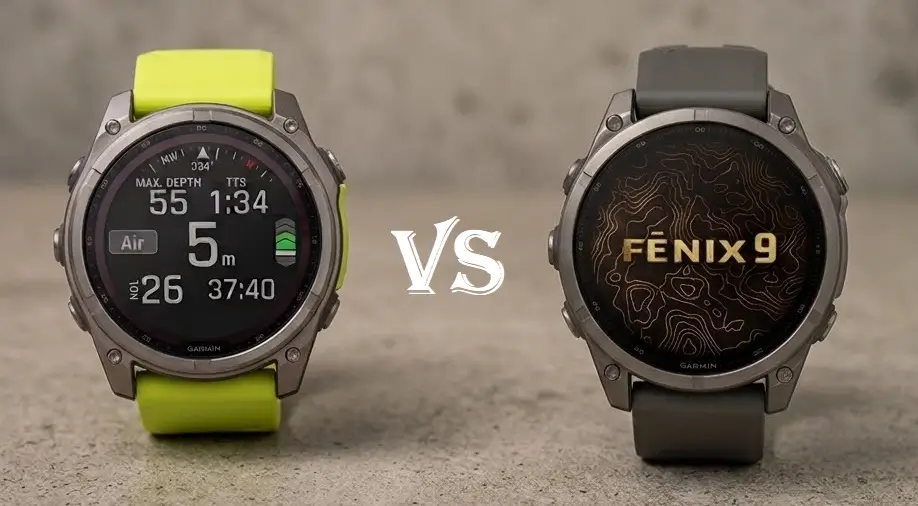
Garmin has officially announced the new Fenix 9 series, leaving endurance athletes and tech fans asking the obvious question: “How does it compare to the Fenix 8 and the feature-packed Fenix 8 Pro?”
Before diving into the numbers, a quick full disclosure: I haven’t tested these watches in the field yet. I usually wait to see the deep-dive testing videos from DC Rainmaker or DesFit to see how the sensors perform in the real world, but neither of them has posted their full reviews yet. So, this breakdown is based entirely on official spec sheets, press releases, and hardware specifications provided directly by Garmin.
Here is the complete breakdown of how the Fenix 8, Fenix 8 Pro, Fenix 9, and Fenix 9 Pro line up against each other.
1. Build and Materials: Polymer vs. Full Titanium
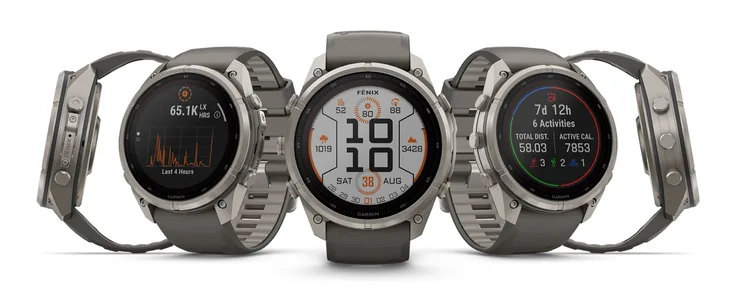
Garmin changed the physical architecture of the Pro lineup this generation:
-
Fenix 8 & Fenix 8 Pro: Both feature a traditional fiber-reinforced polymer (plastic) watch body with a metallic bezel ring attached to the top. The Fenix 8 Pro added extra depth to accommodate its internal satellite radios, making it feel noticeably thick on the wrist.
-
Fenix 9: Uses the traditional polymer case with a titanium bezel.
-
Fenix 9 Pro: Introduces a full titanium watch shell engineered via nano-molding. This slims down the overall watch thickness by up to 16% compared to the chunkier Fenix 8 Pro while giving the case a premium, unified metal finish.
2. Display Tech: 3,000 Nits and a 1.5-Inch Screen
Screen brightness and available sizes vary across all four models:
-
Fenix 8: Standard AMOLED screen outputting crisp, colorful visuals (~1,000 nits).
-
Fenix 8 Pro: Stepped-up brightness to a 2,000-nit AMOLED option and 4,500-nit for the MicroLED option
-
Fenix 9 & 9 Pro: The standard Fenix 9 doubles the base Fenix 8 brightness (~2,000 nits). The Fenix 9 Pro hits 3,000 nits peak brightness. On top of that, the 51mm Fenix 9 Pro features a larger 1.5-inch screen (up from 1.4 inches on the 51mm Fenix 8 and 8 Pro) by slimming down the inner bezel.
3. Software Upgrades: Garmin Epic, Stamina Curve & Stamina Zones
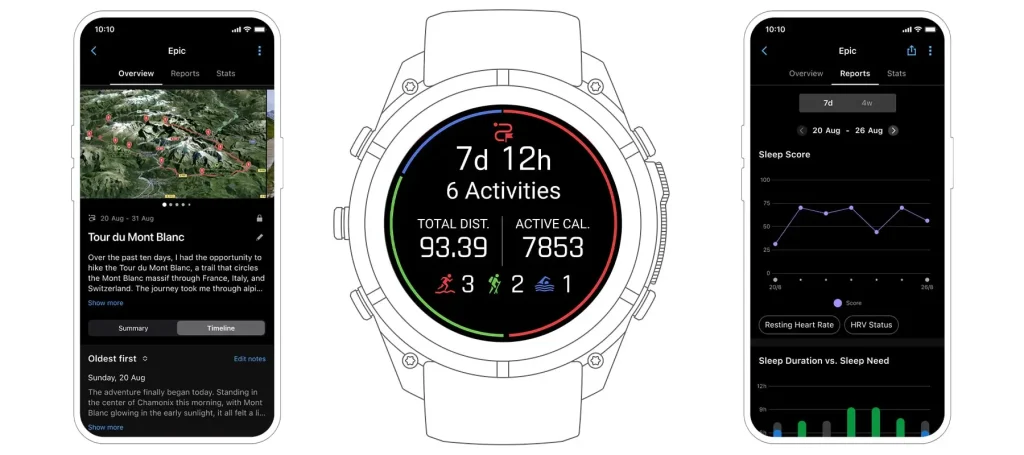
The Fenix 9 platform introduces several flagship software tools designed for long-distance pacing and trip logging:
-
Stamina Curve & Stamina Zones: Building on real-time stamina, the Stamina Curve analyzes your training history to show how long you can sustain specific pace or power targets before hitting a wall. Stamina Zones break this data into five clear, personalized effort ranges during a workout, so you know instantly whether your current pace is burning through your reserves too fast.
-
Garmin Epic: A new feature in Garmin Connect that automatically groups photos, health stats, maps, and performance highlights from multi-day trips or stage races into a single shareable story recap.
-
Faster Mapping & Niche Sports: Map panning is up to 30% faster thanks to a rebuilt mapping engine paired with 64GB storage. Garmin also added dedicated activity profiles like ArcheryX (shot timing/aim stability) and rowing-specific VO2 Max metrics.
Will Fenix 8 get these features?
Garmin hasn’t confirmed the exact update timeline yet, but historically, Garmin brings major software metrics down to previous-generation hardware. There is a very good chance features like Stamina Curve, Stamina Zones, and Garmin Epic will roll out to the Fenix 8 and Fenix 8 Pro via upcoming public beta firmware updates.
4. Built-In Connectivity: LTE & Satellite Access
-
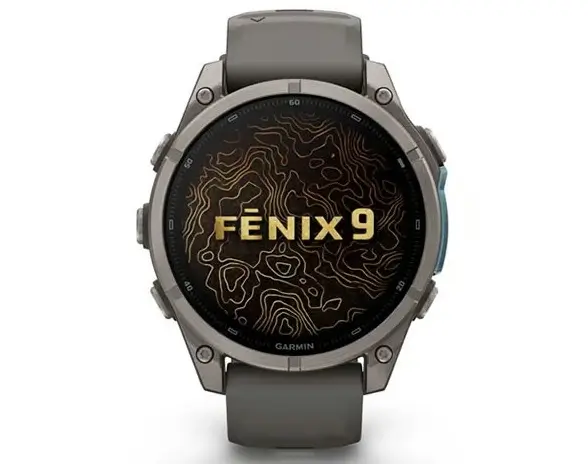
Fenix 8 & Fenix 9: Standard models rely entirely on your smartphone’s Bluetooth and Wi-Fi connection for LiveTrack and messaging.
-
Fenix 8 Pro & Fenix 9 Pro: Both feature integrated inReach satellite messaging and LTE connectivity directly in the watch for phone-free SOS and texting. The Fenix 9 Pro fits these radios into a much thinner titanium chassis than the Fenix 8 Pro.
5. Flashlight Improvements: Green Light Mode Added
-
Fenix 8 & 8 Pro: Feature variable white light intensity and a red night-vision LED.
-
Fenix 9 & 9 Pro: Retain white and red lights, but add a green LED mode. Green light offers sharp contrast for reading paper maps outdoors at night without washing out fine details or ruining natural night vision.
Specs Comparison at a Glance
| Feature | Garmin Fenix 8 | Garmin Fenix 8 Pro | Garmin Fenix 9 | Garmin Fenix 9 Pro |
| Case Construction | Polymer + Metal Bezel | Polymer + Metal Bezel | Polymer + Metal Bezel | Full Titanium Shell |
| Peak Brightness | ~1,000 Nits | 2,000 Nits (MicroLED 4,500) | ~2,000 Nits | 3,000 Nits |
| Max Display Size (51mm) | 1.4 Inches | 1.4 Inches | 1.4 Inches | 1.5 Inches |
| Storage | 32GB | 32GB | 64GB | 64GB |
| LTE & Satellite | No | Yes (inReach built-in) | No | Yes (inReach built-in) |
| Flashlight Colors | White / Red | White / Red | White / Red / Green | White / Red / Green |
| Stamina Curve & Epic | Launch (Coming in update?) | Launch (Coming in update?) | Built-in at launch | Built-in at launch |
Summary
If you already own a Fenix 8, jumping to the standard Fenix 9 gets you double the storage, a brighter screen, and faster mapping. However, if Garmin pushes the new Stamina features down via software, you might not feel rushed to upgrade.
The Fenix 9 Pro is the bigger jump. Combining a full-titanium body, 3,000-nit display, 1.5-inch screen on the 51mm model, and inReach satellite tech in a thinner package makes it a massive upgrade over both the standard Fenix 8 and bulky Fenix 8 Pro.
Once DC Rainmaker or DesFit publish their real-world GPS and heart rate testing videos, we will see if the sensor performance matches these specs!
Also Read: Garmin Epic: How the New Fenix 9 Feature Groups Your Multi-Day Trips Into One Story

