

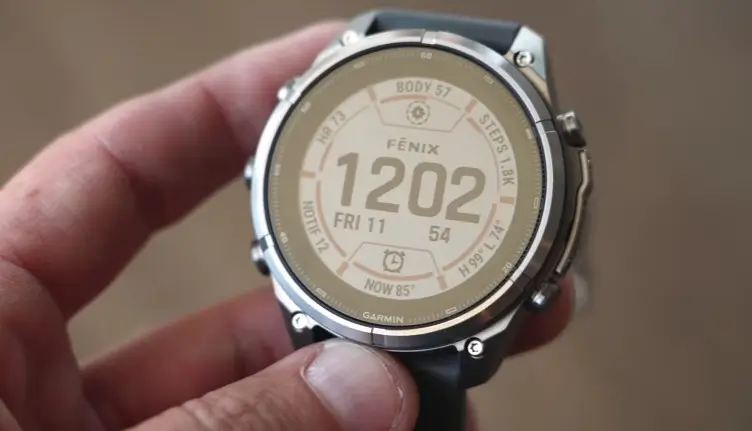
We have already shared a detailed breakdown of Garmin’s Display Dilemma: AMOLED vs MIP – Which Is Right For You? to help endurance athletes decide between screen types. But with recent comments from top executive leadership, the conversation surrounding the future of Memory-in-Pixel (MIP) technology has taken a big step forward.
As fitness smartwatches push heavily toward bright, ultra-vivid OLED screens, many athletes worry that transflective displays are on the verge of extinction. In recent interviews with tech media outlet TechRadar, Garmin’s co-COO Brad Trenkle directly addressed these concerns, giving us a clear look into how Garmin views the battle between MIP and AMOLED.
What Garmin’s Leadership Says About MIP
According to Garmin co-COO Brad Trenkle, traditional transflective MIP displays are officially living on borrowed time—though Garmin has not set an exact expiration date for them.
Speaking on why MIP refuses to disappear, Trenkle highlighted battery life as the ultimate deciding factor. Unlike an AMOLED screen that creates its own light and drains power quickly, a MIP display reflects ambient light from the environment, using a fraction of the energy.
Garmin acknowledges that OLED battery life has improved dramatically from generation to generation, bringing everyday smartwatch modes close to parity. Even so, Trenkle pointed out that “that gap has not completely converged, and I think until it does, we definitely don’t think that MIP will completely go away.”
Where MIP Survives in Garmin’s Lineup
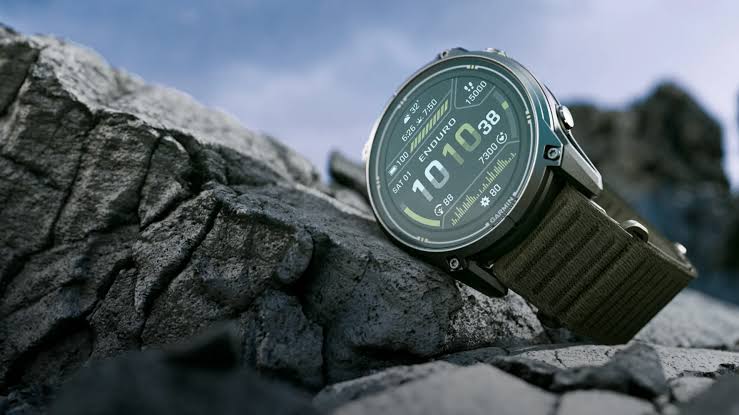
While mainstream lineups like the Forerunner series have largely transitioned to vibrant OLED panels, Garmin continues to reserve MIP for its heavy-duty outdoor and adventure watches, nearly always paired with solar charging technology:
-
Fenix 9 Pro Solar (47mm & 51mm): Offers rugged solar-boosted MIP options alongside its AMOLED sibling models.
-
Enduro 4: Keeps its focus entirely on a solar MIP screen to maximize battery endurance for long-distance athletes.
-
Instinct 3 Solar: Caters to outdoor explorers who want weeks or even infinite battery life under direct sunlight.
Detailed Comparison: AMOLED vs. MIP Solar (Fenix 9 Pro 51mm)
To see how leadership’s claims hold up in practice, we can look at Garmin’s official specifications comparing the 51mm AMOLED Fenix 9 Pro against its MIP Solar counterpart.
| Battery Mode | Fenix 9 Pro (51mm) AMOLED | Fenix 9 Pro (51mm) MIP Solar (No Sun) | Fenix 9 Pro (51mm) MIP Solar (With Sun) |
| Smartwatch Mode | Up to 31 days | Up to 30 days | Up to 57 days |
| Low Power Mode | Up to 42 days | Up to 52 days | Up to 291 days |
| Expedition Mode | Up to 31 days | Up to 42 days | Up to 124 days |
| Standard Activity GPS | Up to 56 hours | Up to 75 hours | Up to 124 hours |
| Max Accuracy GPS | Up to 45 hours | Up to 54 hours | Up to 75 hours |
| Max Battery GPS | Up to 151 hours | Up to 186 hours | Up to 1,000 hours |
Technical Display Comparison
| Feature / Metric | AMOLED Displays | Memory-in-Pixel (MIP) Displays |
| Light Source | Self-emissive pixels (creates its own light) | Transflective (reflects ambient external light) |
| Sunlight Legibility | Requires high peak brightness (up to 3,000 nits), which drains battery | Becomes clearer and easier to read the brighter the sun gets |
| Screen Persistence | Often dims or turns off in Always-On Display (AOD) to save power | Permanently on 24/7 without dimming or blanking out |
| Color & Aesthetics | Deep blacks, vivid high-contrast colors, smartphone-like visuals | Muted, functional colors optimized for readability over flashiness |
The Future of Solar and OLED
A major hurdle for combining AMOLED with ultra-long endurance is solar charging. Traditional thin solar layers placed over a screen act almost like polarized sunglasses, which would make a self-illuminating AMOLED panel look much dimmer and less vivid.
However, Brad Trenkle noted that alternative layouts, such as placing photovoltaic solar cells in a ring around the outer bezel rather than directly over the display pixels, could eventually bridge that gap without ruining picture quality. Until that technology is fully realized across mainstream adventure watches, MIP will retain its crown for multi-day endurance.
Also Read: Garmin Hints at Price Increases for Smartwatches Heading into 2027

