

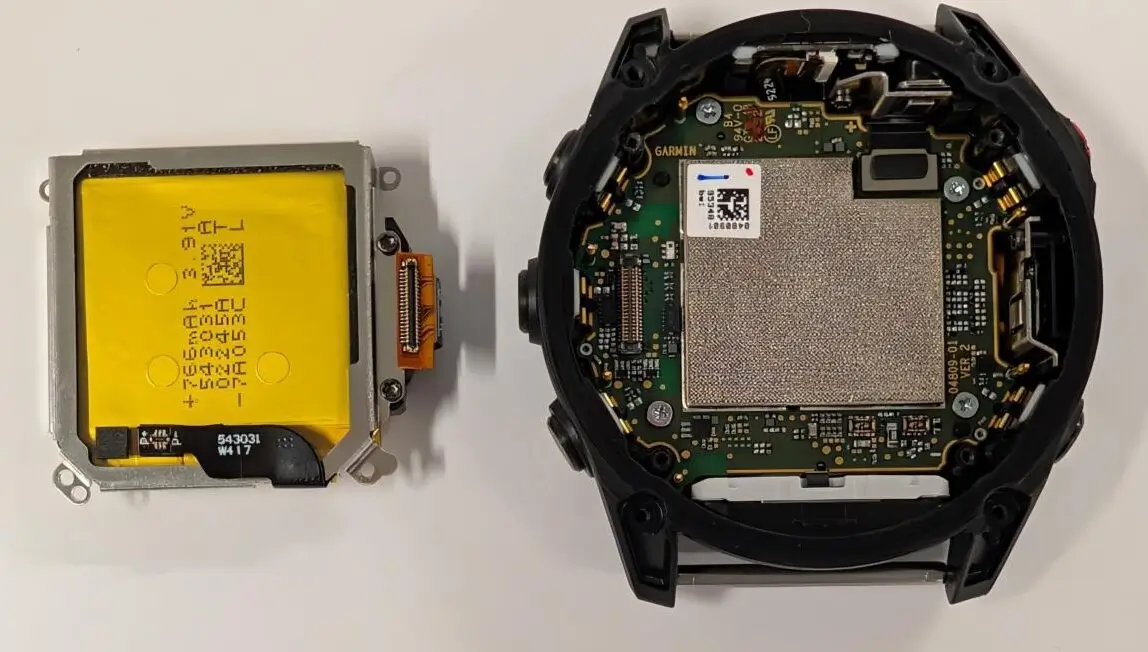
When you shell out over a thousand dollars for a brand-new, top-of-the-line Garmin sports watch, you naturally expect everything ticking away inside it to be state-of-the-art. However, recent teardown findings (Via The5KRunner) reveal a surprising secret about popular fitness wearables: major brands often rely on internal components and processors that are several years old.
Paying Top Dollar for Yesterday’s Processors
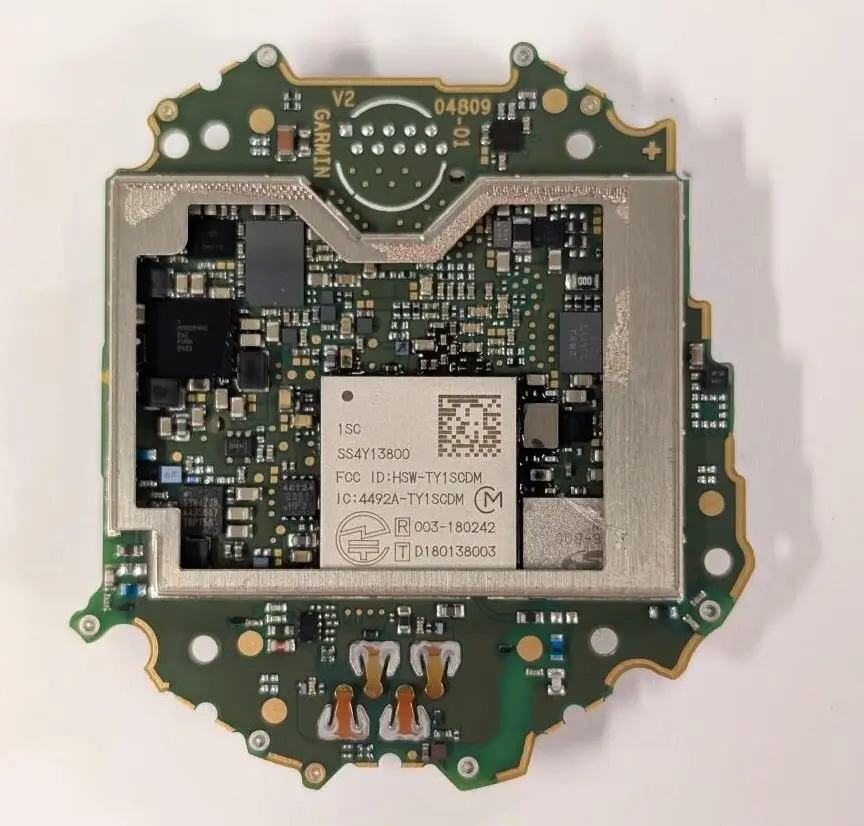
Take Garmin’s high-end multisport watches as a prime example. Even inside a flagship device like the Fenix 8 Pro, the main processor running the whole system is the NXP i. MX RT595 crossover MCU (MIMXRT595SFFOC). Remarkably, this core chip family first appeared back in July 2020 inside the budget Venu Sq
To keep daily background tasks running without draining the battery, the Fenix 8 Pro pairs this main processor with an Ambiq Apollo3 low-power co-processor, which was released in 2018. Core chips responsible for handling menus, system performance, and navigation are frequently reused across generations. While the outer titanium case, bright screen, and software receive shiny annual updates, the actual brain driving the device can be quite vintage under the hood.
Old Hardware Sticking Around in New Garmin Releases
It is not just the main processor that hangs around year after year. Other internal hardware, such as Bluetooth chips, GPS modules, and LTE modems, frequently stick with older technology generations:
-
Bluetooth Chips: The Nordic nRF52832 Bluetooth chip first debuted in the Vivosport back in July 2017. Remarkably, Garmin still uses this exact component in far newer devices, including the Approach J1, Instinct E, Lily 2 Active, and Forerunner 165.
-
GNSS & Modems: Newer releases continue to leverage legacy GNSS location chips from Synaptics and LTE-M connectivity modems from Murata that have been in service for years.
-
Heart Rate Monitors: While Garmin’s top-tier models get upgraded optical sensors first, many mid-range models and lifestyle trackers launched years later still rely on older sensor generations.
Garmin sticks with these older parts because they are stable, ultra-reliable, and cheaper to buy in bulk. They also sip battery power efficiently and come with years of pre-tested bug fixes.
Processor Specs Remain Hidden for Fenix 9 and Fenix 9 Pro

Right now, we cannot verify what processors are inside the new Garmin Fenix 9 and Fenix 9 Pro. While we checked NCC filings in Taiwan, those documents show only the exterior of the watches and testing details. Furthermore, Garmin has placed a 180-day confidentiality hold on FCC internal photos, which means official pictures of the mainboards and internal hardware won’t become public until around February 2027.
Does It Actually Matter for Your Daily Training?
For most runners, cyclists, and everyday athletes, an older chip rarely stops a watch from doing its primary job well. GPS tracking, pace calculation, and heart rate monitoring usually perform at a very high level regardless of the processor’s birth year.
However, as software gets heavier and built-in mapping becomes more detailed, older processors can occasionally show their age. Some users notice slight menu lags or slower loading times when panning across maps on expensive devices.
Ultimately, knowing that flagship watches like the Fenix 8 Pro share core chips with entry-level devices like the Venu Sq, Forerunner 165, or Lily 2 Active gives you a fresh perspective on the price tag. But as long as it tracks your workouts accurately and lasts for days on a single charge, most people are happy to look past what is happening underneath the screen.
Also Read: Garmin Hints at Price Increases for Smartwatches Heading into 2027


We knew this for years!
People are crazy for paying these prices!
And to think about they want to in read e the prices from 2027! Filthy company