
Garmin watches capture an enormous amount of health and workout metrics. However, if you have ever downloaded your raw data directly from Garmin to run custom charts or feed it into AI tools like ChatGPT, you likely encountered a mess. The raw files often contain incomplete fields, weird data formats, and broken links across different files.
To fix this problem, an open-source project called the Garmin Running Data Normalizer was released to clean up and organize these exports automatically.
The Big Mess Inside Garmin Data Exports
Garmin makes it fairly simple to request and download a full export of your user data. The trouble starts when you try to open those files in Python, Excel, or a data tool.
Because Garmin logs data across various formats—ranging from JSON files to raw FIT activity logs—the export files suffer from a few core issues:
-
Missing values and blank fields that crash automated scripts.
-
Inconsistent data types across workouts and daily health metrics.
-
Broken connections between separate files, such as linking your running shoes to specific workouts or connecting daily sleep scores to long-term performance trends.
If you try to analyze your training using custom code or an AI assistant, you usually have to spend hours cleaning up the files first. If you do not clean them properly, the AI or script often makes incorrect guesses or fails.
How the New Normalizer Tool Works
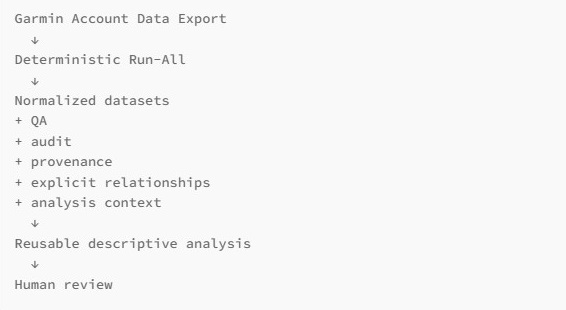
The Garmin Running Data Normalizer acts as a bridge between your messy Garmin export and your final custom analytics. Available as a Python package on PyPI via pip install garmin-running-data-normalizer, it processes your local files and outputs clean, structured datasets.
Key highlights of the tool include:
-
17 Clean Datasets: It reorganizes raw exports into stable categories, covering activities, gear usage, personal records, FIT laps, sleep scores, HRV balance, VO2 Max, training load, and training readiness.
-
Preserved File Connections: It keeps important relationships intact, such as linking your gear to specific runs or matching workouts with lap data.
-
Built-in Quality Checks: Rather than silently deleting missing metrics or making unverified guesses, the tool flags gaps and leaves audit logs so you know exactly what was processed.
Keeping Your Health Metrics Private
One major advantage of this software is security. Fitness exports contain sensitive personal information, including your location routes, heart rate history, and daily habits.
The normalizer runs entirely on your local computer. It does not upload your files to a cloud server or external processing service. Once the tool finishes cleaning your data, you receive neat CSV or structured files stored safely on your machine, ready for your own offline analysis or custom AI prompts.
Who Built It and What Are the Limits?
The project was created by a marathon runner aiming for a sub-3-hour finish time, who built the software to streamline his own long-term training analysis.
While the tool solves major data cleanup headaches, there are a few things to keep in mind:
-
Command-Line Required: The software does not feature a traditional visual interface (GUI). Users need basic familiarity with terminal commands or Python to run it.
-
Selective Metric Support: While it covers 17 key datasets, certain specialized files—such as general Health Status records—are deferred or excluded in current releases.
For runners, data enthusiasts, and developers who want full control over their smartwatch metrics, this open-source package removes the tedious prep work and makes personal sports analytics much easier to build. For more info, please visit the official page of the project on PyPI or GitHub.
Also Read: Garmin Teases New Outdoor Watches for Late 2026 as Fitness Sales Boom

