

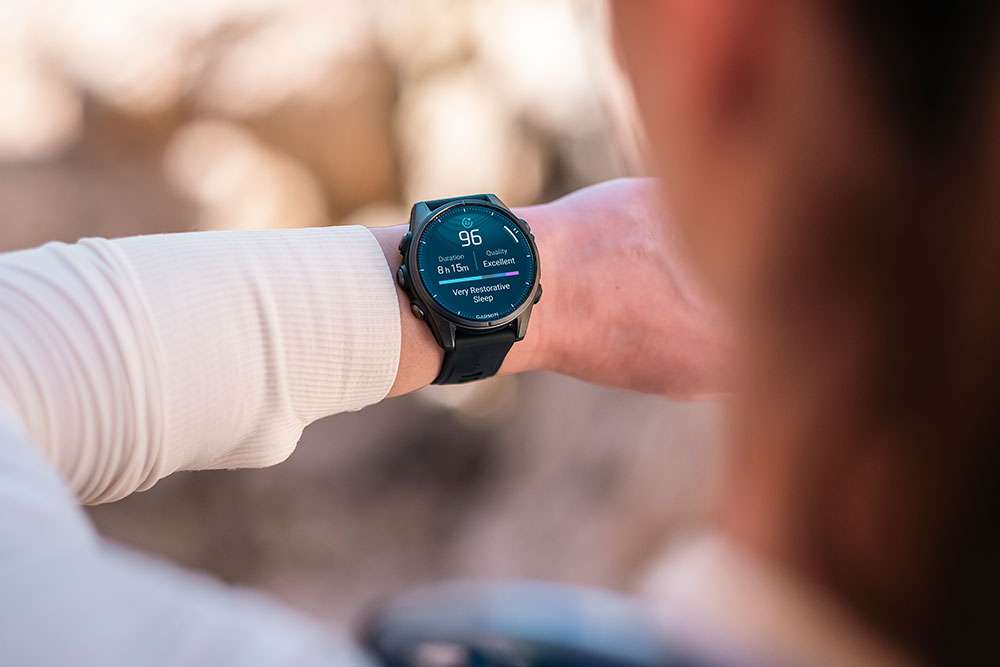
When you spend your days diving into global regulatory filings and intellectual property databases, you start to spot patterns. Filing numbers, trademark updates, and patent publications often tell a story long before a product ever hits store shelves.
Here at Garmin News, we are the first to report on a fascinating filing published on September 15, 2026, that recently surfaced from Garmin in UPSTO: a patent application number US-12736923-B2 titled “Watch with Biplanar Slot Antenna Configuration” (invented by Abu T. Sayem).
If you look past the dense engineering language, this patent reveals a clever solution to one of the hardest problems in wearable design: how to pack better GPS tracking, cleaner wireless connectivity, and stronger hardware performance into a sports watch without making the case thick, bulky, or prone to signal interference.
Here is a simple breakdown of what this patent is all about, how it works, and why it matters for future outdoor watches.
The Problem: Antennas Hate Crowded Spaces
To understand why this patent is interesting, you have to look at how modern sports watches are built.
A high-end outdoor watch needs to talk to a lot of things at once. It needs multiple Global Navigation Satellite Systems (GNSS/GPS bands) for precise tracking, plus Bluetooth, Wi-Fi, or cellular/satellite communication elements.
Traditionally, watchmakers either hid internal antennas inside plastic housings (which limits structural durability) or tried to carve out space near the bezel. But when you pack powerful GPS receivers, communication radios, and a large battery right next to each other inside a tight metal case, the signals start stepping on each other. Interference goes up, and tracking accuracy or battery life goes down.
What is a “Biplanar Slot Antenna”?
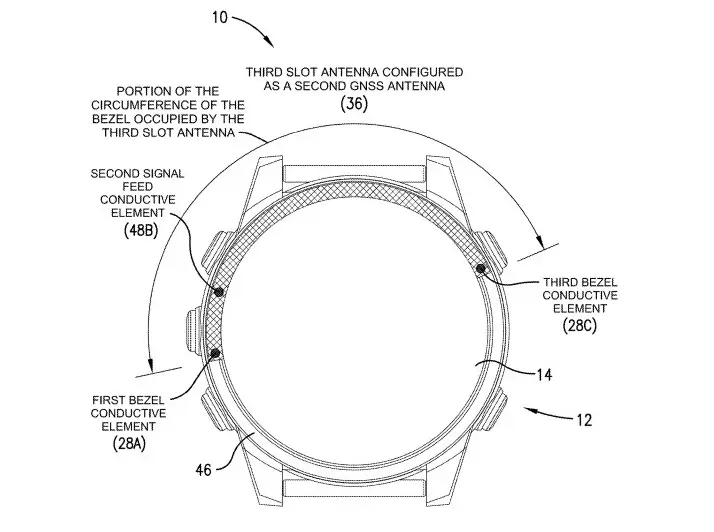
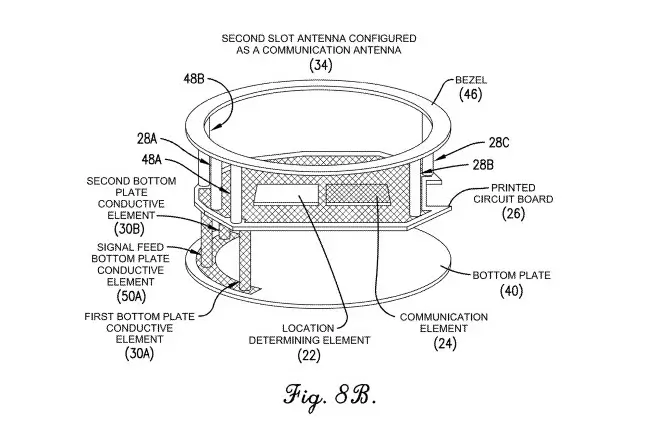
Garmin’s solution, detailed in this patent, introduces a multi-layered approach to antenna placement. Instead of cramming every antenna onto a single plane or inside the watch body, the design uses two distinct horizontal planes—hence “biplanar”.
Here is how the physical structure breaks down:
-
The Upper Layer (The Bezel): An electrically conductive top bezel forms part of the first antenna, which is typically tuned to handle satellite positioning signals (like GPS L1 or L5 bands).
-
The Ground Plane (The PCB): The main printed circuit board (PCB) sits through the middle of the watch and acts as a shared electrical ground plane.
-
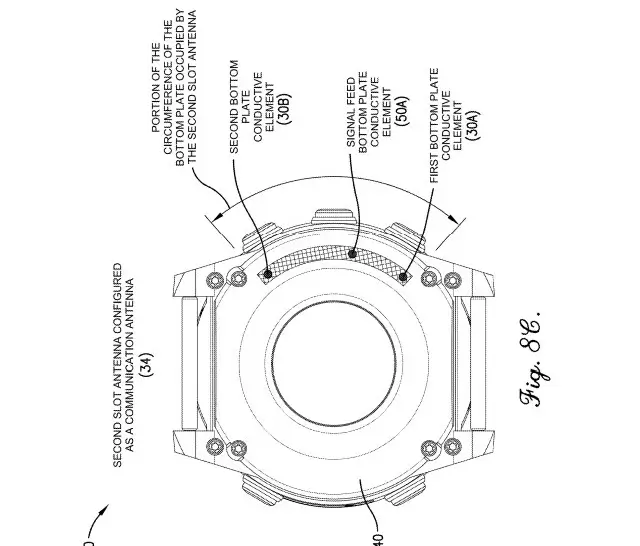
The Lower Layer (The Bottom Plate): The electrically conductive back/bottom plate of the watch case isn’t just there to rest against your wrist—it is actively utilized to form a second slot antenna. This lower antenna can handle data communication, secondary tracking bands, or direct connections.
By sandwiching the internal circuit board between the top metal bezel and the bottom metal plate and using both as active radiating slots, Garmin creates physical separation between different types of wireless signals.
Built for Round and Square Form Factors Alike
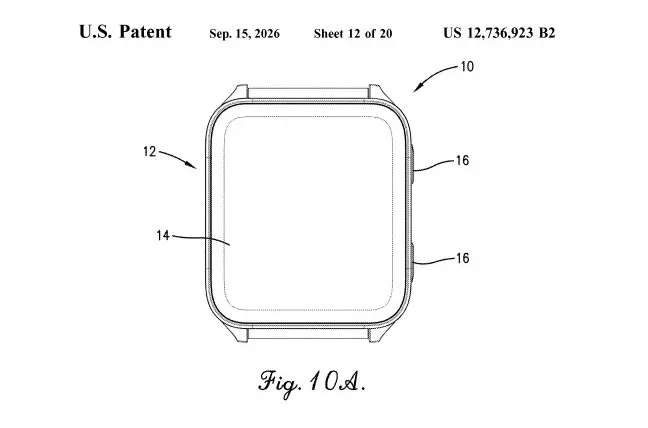
While Garmin is best known for its iconic circular sports watches, a close look at the patent’s schematic drawings reveals an important detail: this architecture isn’t just limited to round designs; it fully accounts for square or rectangular shapes as well.
Whether a device uses a traditional circular case or a square footprint, the core principles remain consistent:
-
The Ground Plane Adapts: The central printed circuit board acts as a shared electrical ground plane regardless of its outer geometry.
-
Perimeter Slot Radiators: Instead of circular rings, the conductive boundary elements and slot apertures simply follow the straight edges and corners of a square or rectangular housing.
-
Flexible Layouts: Engineers can place feed points and tuning elements along the linear sides of a square case just as effectively as a curve, meaning this multi-layered tech could theoretically appear across different product lines down the road.
Internal Bridges and Tuning Networks
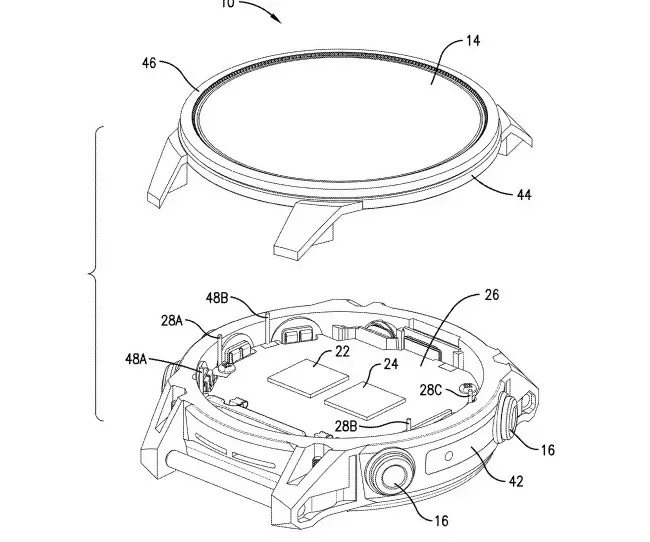
How do these metal pieces actually connect to the electronics inside? The patent points to hardware components like pogo pins, spring-loaded contacts, or conductive clamps. These elements bridge the central circuit board ground plane to the outer bezel and bottom plate, defining the exact width and shape of the radiation slots.
Furthermore, the design can incorporate small tuning elements—such as inductors, capacitors, or switchable networks—to dynamically adjust the electrical length of the antennas. This means the watch can potentially tweak its reception efficiency on the fly depending on whether it is searching for satellites or syncing data.
What Does This Mean for the Future?
Patents don’t always turn into immediate commercial products, but they give us a clear window into what engineers are trying to solve.
If Garmin implements this biplanar setup in future hardware generations, the practical benefits for users would likely include:
-
Cleaner GNSS Performance: Separating the GPS antenna (top bezel) from the data communication antenna (bottom plate) reduces internal electrical noise, keeping tracks sharper under heavy tree cover or near skyscrapers.
-
Better Materials: It allows manufacturers to use premium, rugged metal chassis all around the device without killing wireless connectivity.
-
Space Efficiency: Better signal isolation means engineers can optimize internal volume—leaving more room for larger batteries or supplementary sensors without bloating the watch case size.
It’s another reminder that behind every sleek piece of outdoor gear is a massive amount of hidden radio-frequency engineering.
As always, GarminNews is the absolute first place to spot and report on this filing. Stay tuned as we keep digging through the databases for more unreleased tech scoops!
Also Read: Garmin’s New Fenix 9 Pro Is Live on Amazon—Here Is What You Need to Know

